Toilet Leaking Into the Bowl: How to Spot a Silent Leak
A toilet that “looks fine” can still waste a surprising amount of water every single day. One of the most common hidden problems we see in residential plumbing in Penrith is a toilet leaking into the bowl—quietly, slowly, and without leaving any puddles on your bathroom floor.
This kind of leak is sneaky because it often doesn’t smell, doesn’t drip outside the pan, and doesn’t make a dramatic noise. Instead, it chips away at your water bill and can slowly wear down the toilet’s internal parts until you suddenly get a bigger failure—like a cistern that won’t stop filling or a flush that turns weak and unreliable.
At Local Penrith Plumber, we handle these issues every week as part of our everyday toilet repairs, leak detection, and general plumbing inspections and testing. In this guide, I’ll walk you through exactly how to spot a silent toilet leak, what causes it, what you can safely check yourself, and when it’s best to call a licensed plumber—especially if you want the job done quickly and properly.
What does “toilet leaking into the bowl” actually mean?
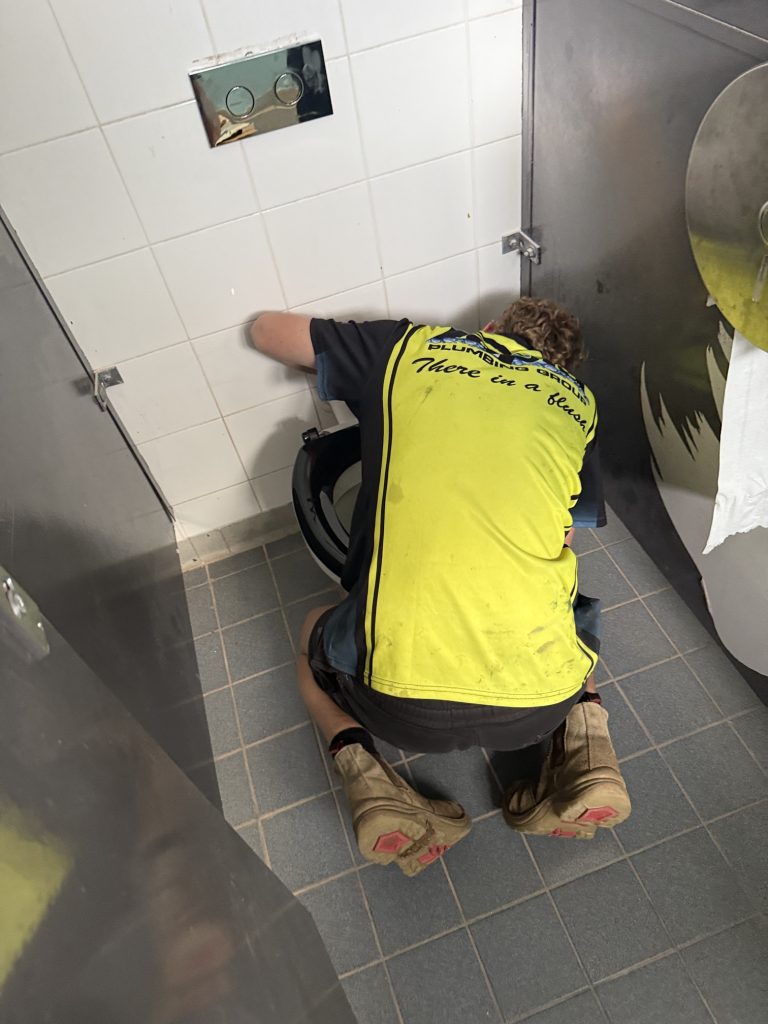
When your toilet is “leaking into the bowl,” it usually means water is escaping from the cistern (tank) into the bowl even when no one has flushed. The toilet is supposed to store clean water in the cistern until you flush. If water sneaks past the internal seals, it drains into the bowl in the background—sometimes so slowly you can’t see it happening.
Most silent leaks happen through:
- The flush valve/outlet valve (the part that releases water into the bowl during a flush)
- The rubber seal (creates the watertight barrier)
- The inlet valve (refills the cistern and shuts off)
- The overflow tube (prevents flooding if the water level gets too high)
When the leak happens, the cistern water level drops. Then the inlet valve senses the drop and refills the cistern again. That cycle can repeat all day and night.
How this ties into real plumbing services:
When we attend a job like this, it often becomes more than just “replace a seal.” We usually check the full system as part of our general plumbing inspections and testing, because a toilet leak can sometimes be linked to:
- Poor water pressure regulation
- Ageing valves and fittings throughout the bathroom
- Hidden water leaks in nearby pipework (especially if the bill is unusually high)
Why silent toilet leaks are a big deal in Australian homes
In Australian households, water costs add up quickly—especially when a toilet runs constantly without you knowing. Even a small leak can create a steady “background waste” that you only notice when the bill arrives.
Silent toilet leaks matter because they can lead to:
Higher water bills (the most common complaint)
A leaking toilet can waste water 24/7. Many Penrith homeowners call us after they notice a bill jump, only to find the toilet has been slowly leaking for weeks.
Ongoing wear on internal toilet parts
If the inlet valve is constantly topping up the cistern, it’s working more than it should. That can lead to faster breakdown, which turns a simple repair into a more annoying issue.
Reduced toilet performance
Some people notice the flush becomes weaker over time. If the toilet is constantly “half refilling,” you might not get the clean, strong flush you expect.
Water restrictions and environmental impact
Australia often deals with drought conditions and water restrictions. Even if restrictions aren’t active right now, it’s still worth avoiding needless waste—especially from something that’s easily repairable.
Local Penrith Plumber tip:
When we fix a toilet leak, we can also check other common water-wasters in the home—like dripping taps, leaking shower mixers, or worn washers—because we provide full residential plumbing in Penrith, not just single-issue repairs.
Quick signs your toilet is leaking into the bowl
Here are the most common signs we tell homeowners to watch for. You don’t need special tools—just your eyes and ears.
1) The toilet randomly refills by itself
If your toilet makes a refilling sound when nobody has flushed, that’s a strong sign water is escaping somewhere and the cistern is topping itself up to compensate.
Related service we provide:
We can check and replace faulty inlet valves, adjust water levels, and confirm whether the leak is through the flush seal or overflow.
2) You hear a faint hissing sound
That soft “hiss” is often the inlet valve letting water in slowly. It may be constant or come and go.
Why it matters:
That “small sound” often means ongoing water loss. Many homeowners ignore it until the bill spikes.
3) You see ripples or movement in the bowl
If the bowl water looks like it’s gently moving or rippling without flushing, water is probably flowing into it.
4) You spot a thin trickle down the inside of the bowl
Sometimes you can see a fine stream coming from the rim area into the bowl. It’s easy to miss unless you’re looking closely.
5) Your water bill rises with no lifestyle change
If your household routine hasn’t changed—same showers, same laundry—but your bill increases, it’s time to look at silent leaks.
Local Penrith Plumber note:
If your bill is unusually high, we can do broader leak detection checks, not just toilet internals—especially if there are signs of hidden leaks near bathrooms, laundry areas, or under slabs.
The easiest way to confirm a silent leak: the dye test (5–15 minutes)
The dye test is one of the simplest DIY checks and it’s very reliable.
What you need
- Food colouring (any colour)
- Or a dye tablet (optional)
Steps
- Carefully remove the cistern lid.
- Add a few drops of food colouring into the cistern water.
- Don’t flush.
- Wait 10–15 minutes (up to 30 minutes for slow leaks).
- Check the bowl water.
What the results mean
- Coloured water appears in the bowl: water is leaking from cistern to bowl.
- Bowl stays clear: you may not have a cistern-to-bowl leak (or it’s intermittent).
Why plumbers still matter even after the dye test:
A dye test confirms there’s a leak, but it doesn’t always show which part is failing. That’s where professional toilet diagnostics and general plumbing inspections help—so you fix the actual cause, not just guess.
The most common causes of a toilet leaking into the bowl
Let’s break down the real causes we see in Penrith homes.
1) Worn or warped flush valve seal (most common)
The rubber seal is designed to stop water from escaping from the cistern. Over time, it can:
- Crack
- Go stiff or brittle
- Flatten and lose shape
- Get slimy buildup that prevents a good seal
What you may notice:
- Toilet refills randomly
- Dye test goes positive
- Weak flush or inconsistent flush
How we fix it:
We replace the seal and check the flush valve alignment, then test for proper shutoff. This is a common, quick toilet repair we do under our general plumbing repairs and installations service.
2) Dirty or damaged flush valve seat
Even a new seal won’t work if the surface it presses against is rough or dirty. Mineral buildup and grime can stop the seal from sitting properly.
Signs:
- Leak improves after cleaning but returns
- Leak is slow and steady
- Seal looks okay but still leaks
How we fix it:
We clean the seat properly, and if it’s damaged, we replace the valve assembly. We also inspect related fittings to ensure there’s no hidden leak affecting bathroom plumbing.
3) Water level too high (overflow running into the bowl)
If the cistern is overfilling, water runs into the overflow tube and then into the bowl. That looks like a “leak” but it’s really a water level issue.
Signs:
- Water level sits near the top of overflow tube
- Constant running or trickling
- Inlet valve seems to refill too often
How we fix it:
We adjust the float/inlet settings and replace the inlet valve if it’s failing. This falls under our toilet repair and plumbing inspections and testing.
4) Faulty inlet valve (keeps refilling)
If the inlet valve doesn’t shut off correctly, it can keep topping up the cistern and pushing excess water into the overflow.
Signs:
- Ongoing filling sounds
- Water seems to keep “trying to reach” a level
How we fix it:
We replace the inlet valve with a quality part, set the correct water level, and confirm normal operation.
5) Misaligned parts after a DIY repair
If someone replaced a button, adjusted parts, or fitted a seal incorrectly, it may not sit properly.
Signs:
- Leak started after a repair
- Toilet flush feels different afterwards
How we fix it:
We realign or replace the assembly and run a full check.
Step-by-step checks you can do safely at home
You can do these checks without pulling the toilet apart.
Step 1: Listen for refilling
In a quiet house, listen for random refills. This is one of the strongest clues.
Step 2: Check cistern water level
Remove the lid and look at the level compared to the overflow tube. It should sit below the overflow.
Step 3: Turn off the isolation tap
Turn the tap at the wall clockwise and wait 10–15 minutes.
- If the bowl leak stops, it confirms the issue is within cistern control parts.
- If it continues, the leak may be unrelated (rare, but possible).
Step 4: Do the dye test
Confirm cistern-to-bowl leak.
When to call us:
If these tests confirm a leak but you’re unsure which part is failing, we can diagnose it properly and fix it under our general plumbing repairs and installations service—so you don’t waste time swapping the wrong parts.
Can you fix a toilet leak into the bowl yourself?
Sometimes yes—especially if it’s a simple seal replacement or water level adjustment. But DIY can backfire if parts are worn, brittle, or not compatible.
DIY-friendly fixes
- Cleaning mineral buildup around the flush seat
- Adjusting cistern water level
- Replacing a flush valve seal (if accessible and standard)
When DIY is risky
- Old cisterns with brittle plastic
- Specialty toilet systems
- Commercial toilets
- Unknown parts (hard to match)
- Leaks linked to water pressure issues
Professional advantage:
As part of our residential, commercial, and industrial plumbing services, we carry the right fittings and can fix it in one visit—plus we can identify if there are other water loss issues (like a bathroom tap leak or hidden pipe leak).
How to clean the flush valve seat (simple maintenance)
If you suspect buildup is causing the leak:
- Turn off the water.
- Flush to empty the cistern as much as possible.
- Gently wipe around the valve seat.
- Use mild vinegar on a cloth to break down minerals (avoid harsh chemicals).
- Turn water back on and re-test.
If it still leaks, the seal or valve likely needs replacement.
How to adjust the cistern water level
A lot of toilets allow water level adjustment through:
- A screw mechanism
- A clip
- A float arm adjustment
Goal: keep water level comfortably below overflow tube top.
If the inlet valve won’t hold a steady level, it’s probably failing and needs replacement.
What if the leak looks like it’s coming from under the rim?
If water seems to enter the bowl from the rim holes, it often points to:
- Water running through the overflow
- Inlet valve not shutting off properly
- Incorrect cistern water level
This is where we often step in with a proper inspection—because what looks like “a leak into the bowl” can actually be an overflow problem.
How much water can a leaking toilet waste?
Silent leaks can waste a surprising amount because they run continuously. If you suspect a leak, it’s worth treating it as a priority—especially if your bill has jumped or the toilet refills frequently.
Extra note:
If you’ve also noticed slow drains in the bathroom or gurgling sounds in the house, that could point to broader plumbing concerns. Local Penrith Plumber also handles blocked drains, including:
- Water jetting
- Drain/sewer cleaning
- CCTV drain camera inspections
- Tree root removal
Sometimes plumbing issues show up in clusters, so it helps to check the home as a system.
When to call a plumber in Penrith for a toilet leaking into the bowl

Call a licensed plumber if:
- Dye test confirms a leak and it keeps returning
- Toilet is constantly running/refilling
- Parts look cracked or worn
- You want it fixed fast without trial-and-error
- You’re managing a commercial property and need reliable fixtures
We can also check related services like:
- Leak detection (water, shower, pool, and gas)
- General plumbing repairs and installations
- Gas fitting and gas leak detection
- Hot water system servicing (because water pressure and valves can affect multiple fixtures)
How plumbers fix a toilet leaking into the bowl (what to expect)
When Local Penrith Plumber attends a toilet leak job, we usually:
- Confirm the leak path (visual + dye test method).
- Inspect the flush system, inlet valve, seal, and overflow.
- Replace worn components (seal, inlet valve, flush valve parts).
- Adjust the correct water level.
- Test flush performance and refill shutoff.
- Check for any related leaks nearby (if bill increases suggest bigger issues).
We aim for a lasting repair—not a quick temporary fix.
FAQs about toilet leaks into the bowl (extra homeowner questions)
Is this leak dangerous?
Not usually dangerous, but it can waste a lot of water and money, and it can lead to bigger toilet failures if ignored.
Can water pressure cause toilet parts to fail faster?
Yes—high pressure can cause inlet valves and seals to wear out sooner.
Why does the leak stop sometimes then return?
It may be intermittent due to seal movement, buildup shifting, or inlet valve behaviour.
Should I replace the whole toilet?
Most of the time, no—internal parts can usually be repaired or replaced unless the toilet is cracked or extremely old.
How Local Penrith Plumber Can Help You
If your toilet is leaking into the bowl, don’t wait until your next water bill confirms it. A silent leak can run non-stop, and in many cases, it’s an easy fix when handled early.
At Local Penrith Plumber, we provide fast, professional help for residential plumbing in Penrith, including toilet diagnostics and repairs—plus the related plumbing services that often matter at the same time.
Call Local Penrith Plumber now: 243125618
We can help with:
- Toilet repairs and installations (running toilets, weak flushes, faulty valves, leaking cisterns)
- General plumbing repairs (taps, toilets, showers, inspections and testing)
- Leak detection (water, shower, pool, and gas)
- Blocked drain clearing and repairs (water jetting, drain/sewer cleaning, CCTV camera inspections, tree root removal)
- Hot water system solutions (gas, electric, instant, heat pumps, solar, commercial servicing and repairs)
- Gas fitting and gas leak detection
- Water filtration solutions for cleaner, better-tasting water
If you want a proper diagnosis and a long-term fix (not guesswork), give us a call on 243125618 and we’ll sort it out.